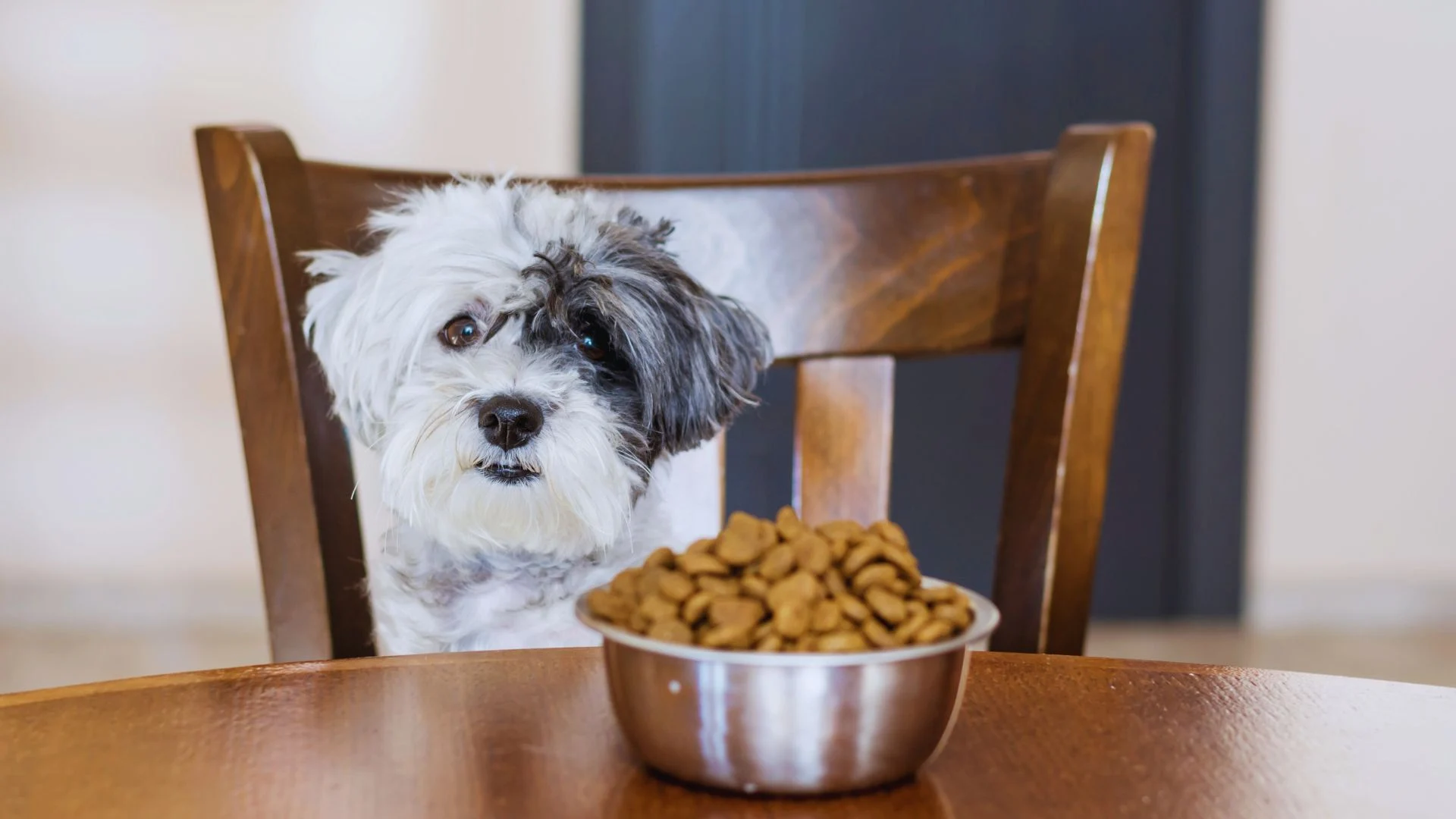
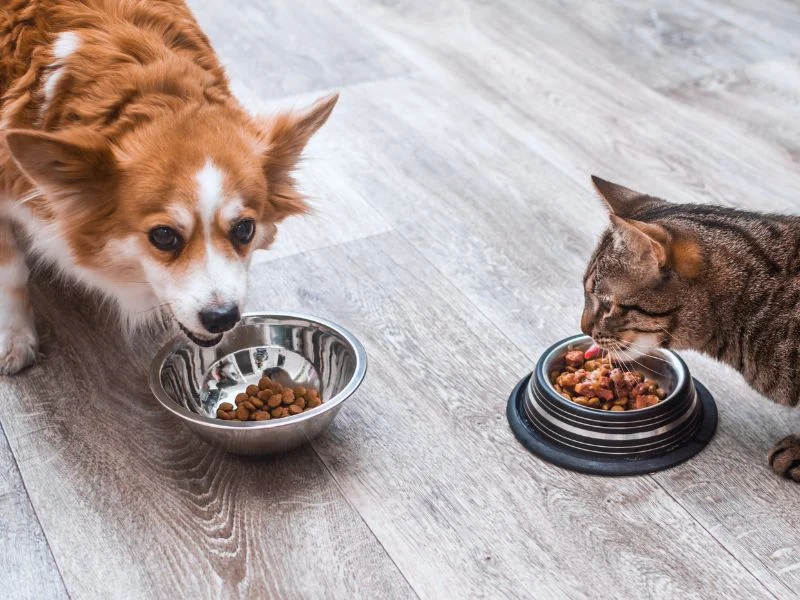
You turn around, and your dog is nose-deep in the cat’s bowl—again. It’s a familiar scene in many multi-pet homes and often sparks the same worried question: Can dogs eat cat food? The short answer is yes, technically—but it’s not a good idea long term. While a few stolen bites usually won’t cause harm, regular access can lead to real health problems. In this guide, we’ll explain why dogs love cat food, how it differs from dog food, the short- and long-term risks, what to do if your dog eats it, and practical ways to stop the habit before it becomes an issue.
Why Do Dogs Love Cat Food So Much?
Cat food is formulated for obligate carnivores, so it’s packed with meat-based protein and fat. That combination makes it smell stronger and taste richer—basically irresistible to dogs. Add in a dog’s natural tendency to be an opportunistic eater, and the cat’s bowl becomes a high-value target. Novelty also plays a role: food that isn’t “theirs” feels special. This is why the problem pops up most often in homes with free-fed cats or bowls left at floor level. Understanding the attraction helps set realistic expectations and better prevention strategies.
What’s the Difference Between Dog Food and Cat Food?
Dogs are omnivores, while cats are obligate carnivores. That fundamental difference shapes how each food is made—and why they’re not interchangeable.
Key nutritional differences
-
Protein: Cat food contains significantly higher protein to meet feline needs.
-
Fat: Higher fat boosts calories and palatability for cats.
-
Taurine: Essential for cats and added to their food; dogs synthesize their own.
-
Fiber: Dog food includes more fiber for digestive health.
-
Vitamins: Cats require added niacin and arachidonic acid; dogs don’t need these in the same amounts.
Both foods are formulated to meet standards set by the Association of American Feed Control Officials, but those standards are species-specific.
Simple comparison (typical ranges)
Those differences explain why Cat Food can overwhelm a dog’s system if eaten regularly.

Is Cat Food Bad for Dogs? The Short-Term Effects
A one-time raid of the cat bowl usually leads to mild digestive upset—if anything at all. Most healthy adult dogs bounce back quickly.
Common short-term symptoms
-
Vomiting
-
Diarrhea
-
Gas or bloating
-
Lethargy
Symptom checklist (severity guide)
-
Mild: Soft stool, brief nausea; monitor at home.
-
Moderate: Repeated vomiting/diarrhea; call your vet for advice.
-
Serious: Severe pain, persistent vomiting, refusal to eat; seek care promptly.
Short-term issues are usually self-limiting, but repeated exposure raises the stakes.
What Happens If Dogs Eat Cat Food Regularly? Long-Term Risks
Consistent access is where problems begin.
-
Pancreatitis: High fat is a major trigger. Pancreatitis causes painful inflammation and can be life-threatening.
-
Obesity: Cat food is calorie-dense; weight gain happens fast.
-
Kidney & liver strain: Excessive protein over time can tax these organs.
-
Nutritional imbalances: Too little fiber and incorrect vitamin ratios for dogs.
-
Dental issues: Cat kibble is smaller and not designed for dog teeth.
Dogs are at the highest risk
-
Those with prior pancreatitis
-
Kidney or liver disease
-
Obesity
My Dog Ate Cat Food — What Should I Do Right Now?
This is a common, high-stress moment. Take a breath and follow a simple plan:
-
Assess the amount: A bite or two is different from a full bowl.
-
Adjust meals: If they ate a lot, consider skipping the next meal.
-
Call your vet if needed: Especially if symptoms last beyond 24 hours.
-
Watch for pancreatitis signs: Hunched posture, hard abdomen, and refusing food.
Reassurance matters: a small amount is very unlikely to be dangerous for a healthy adult dog.
What About Puppies? Can Puppies Eat Cat Food?
Puppies are still growing, and nutritional balance is especially important. The high fat and protein in cat food can cause accelerated weight gain and may contribute to musculoskeletal issues during development. While there are rare cases where a veterinarian may recommend short-term cat food for an underweight puppy, this should only happen under professional guidance. For everyday feeding, stick to puppy-specific dog food formulated for growth.
Can Dogs Eat Cat Treats?
In most cases, dogs can eat cat treats in very small amounts without immediate harm, but that doesn’t make them a good choice. Cat treats are formulated for feline nutritional needs, which means they’re often higher in fat, protein, and calories than dog treats. This makes them especially tempting to dogs—and potentially problematic if given regularly.
The biggest concern is pancreatitis. Repeated exposure to high-fat treats can trigger painful inflammation of the pancreas, particularly in small breeds, senior dogs, or dogs with a history of digestive sensitivity. Even without pancreatitis, frequent cat treats can contribute to weight gain, digestive upset, and nutritional imbalance.
Texture and size also matter. Many cat treats are smaller and harder, which can increase the risk of choking or poor chewing in larger dogs. Some varieties may contain ingredients that are unnecessary or excessive for dogs when fed often.
For safer options, stick to dog-specific treats formulated for canine digestion and calorie needs. If you want simple, natural alternatives, small portions of carrots, cucumber, or cooked sweet potato (plain, no seasoning) are excellent choices.
Bottom line: an occasional stolen cat treat is unlikely to be dangerous, but they should never become part of a dog’s regular treat routine.
When Might a Vet Actually Recommend Cat Food for Dogs?
While cat food is not designed for dogs, there are limited, short-term situations where a veterinarian may recommend it as part of a medical plan. This is always done with professional oversight and a clear goal in mind.
One common scenario is severely underweight or malnourished dogs. Because cat food is more calorie-dense and higher in protein and fat, it can help jump-start weight gain when a dog is refusing regular dog food. The strong aroma and rich taste may also stimulate appetite in dogs recovering from illness or surgery.
Vets may also consider temporary use for dogs experiencing muscle loss due to aging, injury, or prolonged disease. The higher protein content can support short-term muscle rebuilding while the underlying condition is treated.
In rare cases, dogs with temporary appetite suppression—such as after certain medications—may be encouraged to eat cat food briefly to avoid dangerous calorie deficits.
Importantly, this approach is never long-term. Veterinarians carefully monitor portion sizes, duration, and the dog’s response, and transition the dog back to a balanced dog-specific diet as soon as possible.
The key takeaway remains the same: cat food isn’t poison, but it’s not nutritionally balanced for dogs. When used, it’s about context, quantity, and veterinary guidance, not convenience or routine feeding.
How to Put an End to Your Dog Eating Cat Food
Practical prevention works best:
-
Feed pets in separate rooms.
-
Elevate the cat’s bowl (cat tree, shelf, or appliance top).
-
Use a baby gate with a cat-sized gap.
-
Install a cat door or latch that blocks dogs.
-
Switch to scheduled cat feeding instead of free-feeding.
-
Train a solid “Leave It” command.
-
Store cat food in sealed, inaccessible containers.
Consistency turns these tips into habits that stick.
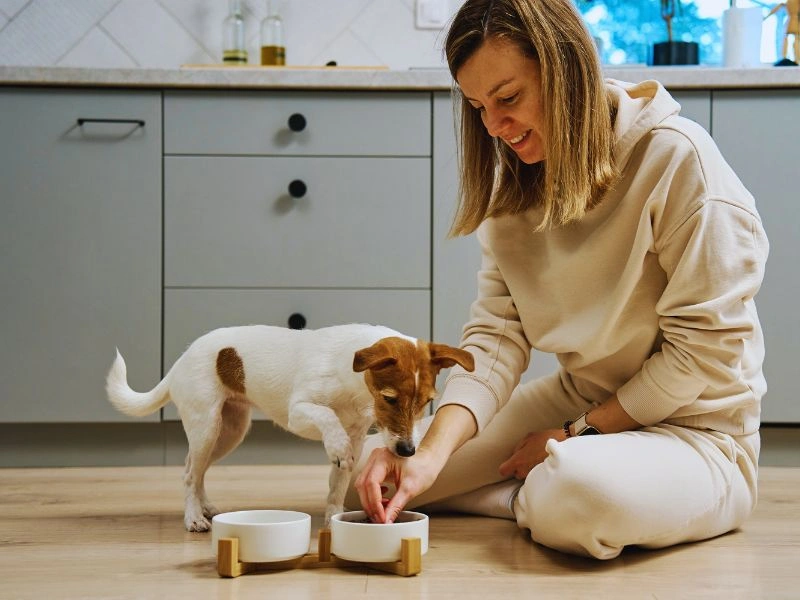
Final Thoughts
So, can dogs eat cat food? An occasional nibble is probably fine for a healthy dog, but regular feeding carries real health risks—from pancreatitis to obesity and nutrient imbalances. The safest approach is prevention, proper feeding routines, and dog-appropriate nutrition. If your dog has eaten cat food and you’re worried, don’t hesitate to call your vet—they can help you decide the next best step with confidence.
FAQs
1. Can dogs eat wet cat food?
Same risks apply; wet formulas are often even higher in fat and protein.
2. Can a dog die from eating cat food?
Unlikely from one incident; severe pancreatitis is the main risk with regular intake.
3. Is cat food toxic to dogs?
Not toxic like chocolate, but harmful in large or frequent amounts.
4. Can dogs eat cat food in an emergency?
Yes, once in a true emergency—transition back to dog food ASAP.
5. Why does my dog keep stealing cat food?
It smells richer and tastes better; management and training usually solve it.